Hyperfixation No. 10Body
Football shirts as brand identities
Brazil's canarinha, Peru's red sash, the Netherlands' orange: what football shirts teach us about branding, distinctive assets and community.
SoundtrackLatinoamérica · Calle 13
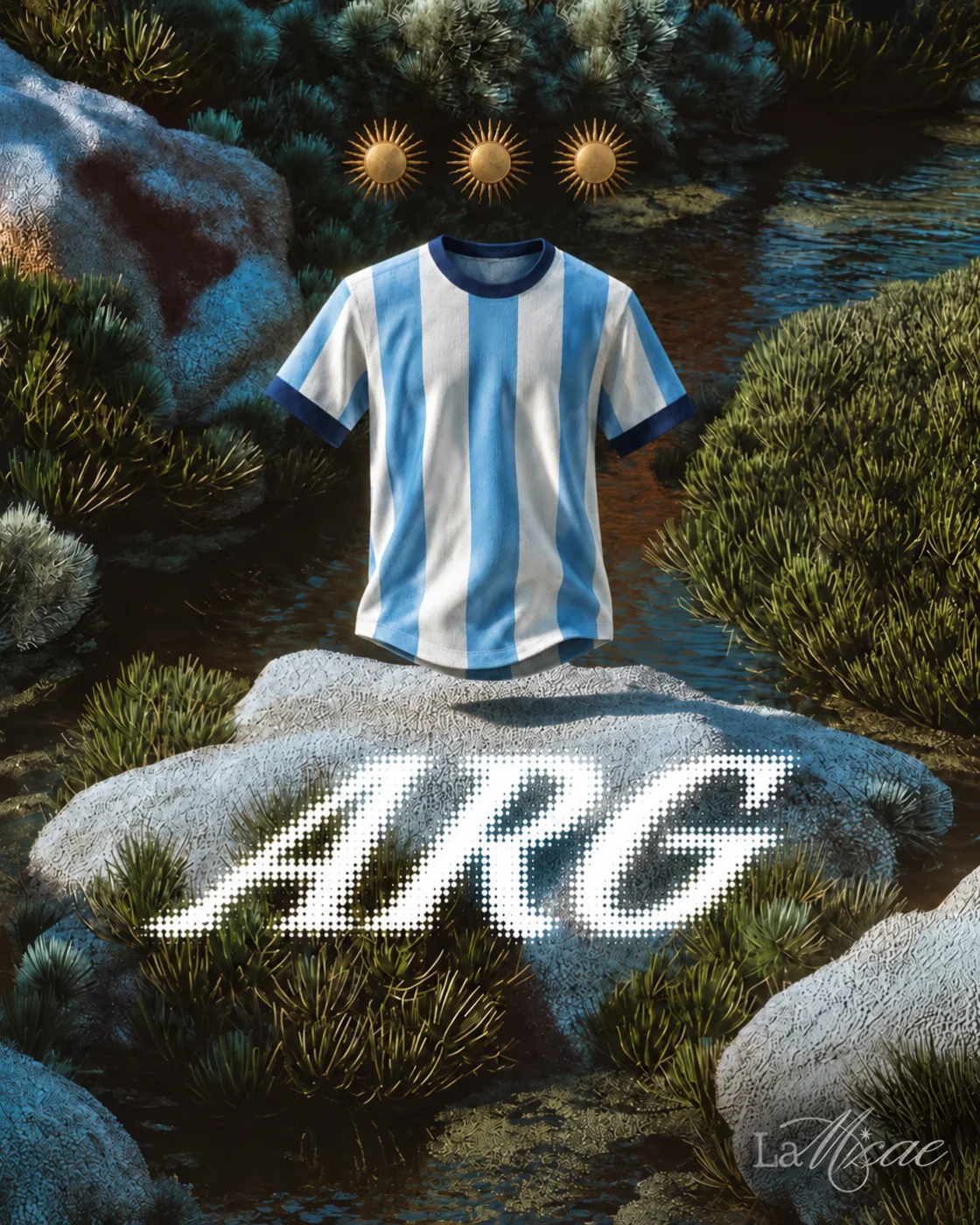
A football shirt is a flag you can sweat in. I love sports, and every time I watch a match I end up looking at the kits more than the score. Because few design pieces carry so much identity in so little space.
The canarinha was born from a wound
Brazil played in white until 1950. After losing the World Cup final at the Maracanã to Uruguay, the famous Maracanazo, that kit became tied to defeat. In 1953 a contest was held to create a new one in the colors of the flag, and Aldyr Garcia Schlee won it: a yellow shirt with green details and blue shorts. The canarinha was born as an emotional rebrand.
The best identities are born from a story, not a trend.
A single gesture: Peru's red sash
Peru's shirt is white with a diagonal red band. That's it. And it's one of the most recognizable in the world. It proves that a well-chosen distinctive asset, a single graphic gesture, can carry an identity for generations.
Color as belonging
The Netherlands plays in orange because of the House of Orange-Nassau, the royal family. In Medellín, Nacional's green and white or Medellín's red and blue split whole cities. In football, color isn't aesthetics: it's belonging. Nobody tattoos a brand manual, but a huge number of people tattoo a crest.
What football teaches branding
- Heritage and renewal: there's a new shirt every season, but the DNA doesn't change.
- One strong distinctive asset is worth more than many details.
- The community is the brand: the fans wear it, defend it and sing it.
- The object matters: fabric, collar and the typography of the numbers tell the story too.
Designing an identity, for me, is a lot like designing a shirt: it has to work on the pitch, in the stands and in memory. If your brand needs that, let's talk branding.
Takeaways
In short
- Brazil's canarinha was born in 1953 as a response to the 1950 Maracanazo.
- Peru's red sash shows the power of a single distinctive asset.
- In football, color is belonging: the community is the brand.
La Micae · Design from Medellín
What if this hyperfixation became your next project?
Branding, web design and development, editorial design, illustration, social media, and AI and automation consulting.