Hyperfixation No. 07Ceilings & mosaics
Persian rugs, cross-stitch and grids: the patterns we inherit
Before pixels there were knots and stitches. How Persian rugs and cross-stitch explain grids, pattern design and visual systems.
SoundtrackEl Nazareno · Ismael Rivera
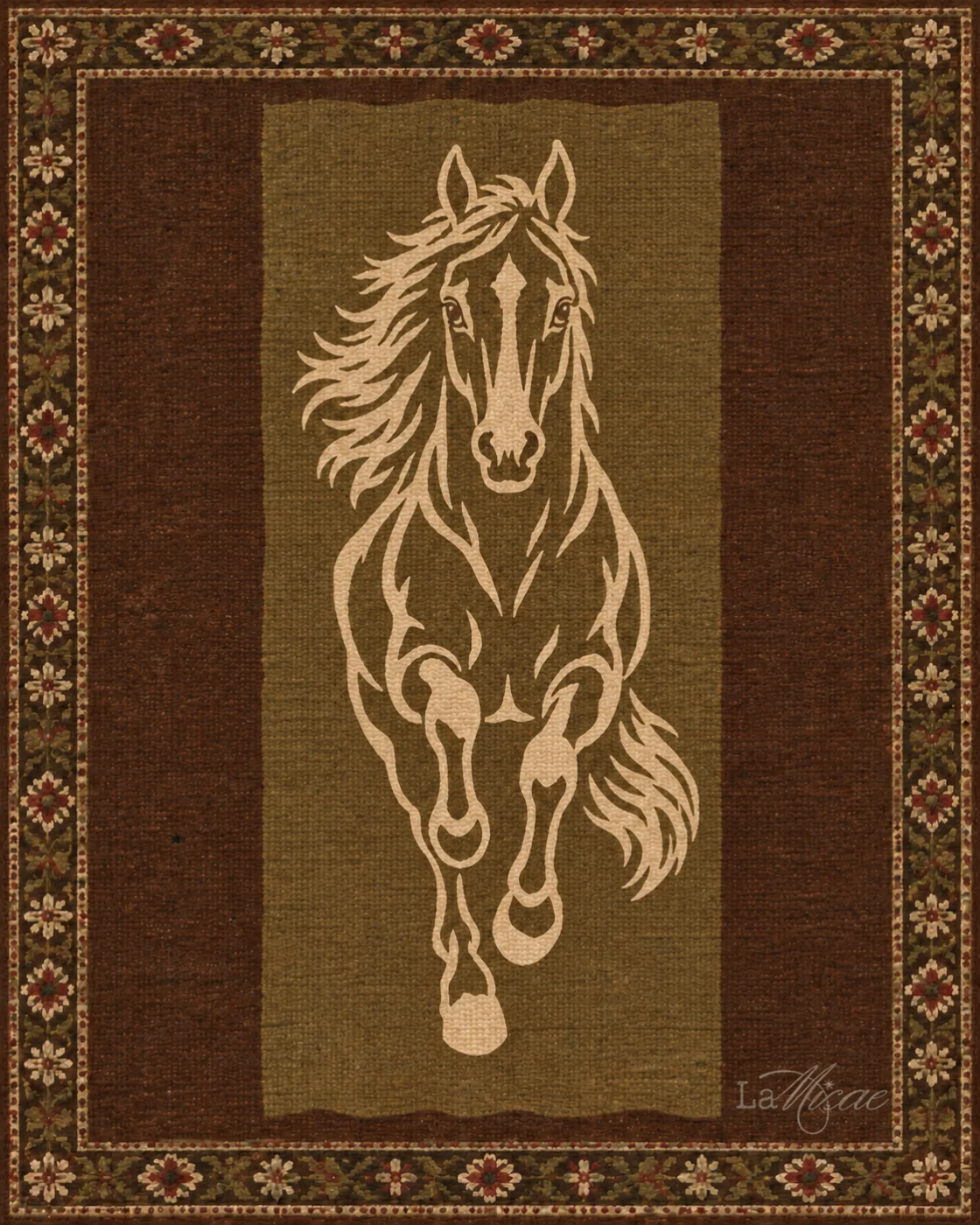
Before screens existed, pixels already did. They were called knots, stitches, tesserae. My reposts give it away: Persian rugs, cross-stitch embroidery, mosaics. I think that's what hooks me: patterns that someone inherited, learned and kept repeating with their own hands.
The Persian rug as an editorial page
Look at a Persian rug calmly and you'll find a structure any editorial designer recognizes: a central medallion, a field around it and several borders framing everything, like margins. It's a page: headline, body text and folios.
Each knot is a minimal unit. Knot density defines the image's resolution, just like pixels per inch in a photo. And a much-repeated legend says some weavers leave a mistake on purpose, because only the divine is perfect. I don't know if it's true, but I love it as a design idea.
A border is a margin that decided to be beautiful.
Cross-stitch: the grid made by hand
Cross-stitch is embroidered on fabric with a visible grid. Each X takes up one square. There are no real curves: curves are suggested with steps, exactly like in 8-bit video game pixel art. The grandmothers embroidering napkins were doing bitmap design without knowing it.
System and variation
What ties together the rug, the embroidery and the mosaic is the same tension any brand identity has: a strict system that allows variations. The rules are few (the grid, the palette, the motif) and the combinations are endless.
I applied it in La Famiglia: the pizza box takes the stripes of a trattoria tablecloth and turns them into a system repeated across packaging, edges and details. It's an inherited pattern, reinterpreted.
Patterns worth inheriting
- Define a minimal unit before designing the whole.
- Use borders to frame, not just to separate.
- Limit the palette: patterns breathe better with few colors.
- Leave room for human error: the handmade shows, and people appreciate it.
I'd love for these inherited patterns to have a public archive someday, with names and authorship. For now they're one more hyperfixation.
Takeaways
In short
- A Persian rug has an editorial structure: medallion, field and borders as margins.
- Cross-stitch is handmade pixel art on a visible grid.
- Good patterns are strict systems with endless variations.
La Micae · Design from Medellín
What if this hyperfixation became your next project?
Branding, web design and development, editorial design, illustration, social media, and AI and automation consulting.